Newer standard, or older flagship?
This is a comparison that comes up constantly on the refurbished market and almost never at launch: a newer mid-tier phone against an older flagship, at roughly similar money.
The Pixel 6 Pro was Google's top-end phone of its generation. The Pixel 7 is the standard model of the generation that followed. New, they were never really competitors. Second-hand, they frequently sit close enough in price that the choice is genuinely open.
The answer is not simply "buy the newer one", and the reasons why are worth understanding before you spend anything.
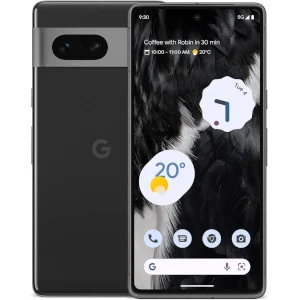
Where the Pixel 6 Pro still wins
The telephoto lens. This is the single biggest difference and it is not close. The Pixel 6 Pro has a 4x optical telephoto. The Pixel 7 has no zoom lens at all, relying entirely on digital crop from the main sensor.
Google's computational photography is genuinely excellent, and its digital zoom is better than most. But it cannot replace optical zoom, and the gap widens the further you push it. If you photograph anything at distance, whether that is school sport, wildlife, live music or architecture, this alone may decide the comparison for you.
The display. The 6 Pro has a 6.7-inch QHD+ panel at 120Hz. The Pixel 7 has a 6.3-inch FHD+ panel at 90Hz. Larger, sharper and smoother on every measure. For video, reading and gaming, the older Pro simply has the better screen.
The ultrawide camera. Higher resolution with a wider field of view on the 6 Pro.
On raw hardware specification, the older Pro out-specs the newer standard model in several genuinely meaningful ways. That is unusual, and it is what makes this comparison worth thinking about rather than defaulting to the newer phone.
Where the Pixel 7 wins
Software support. Google's update commitment runs from a phone's original launch date, which means the Pixel 7 has more of its window remaining, permanently. You cannot buy your way out of this on the 6 Pro; the clock started earlier.
On a phone you intend to keep for several years, this is the most practical difference of all, and it is the single biggest driver of the resale price gap between the two.
Efficiency and heat. The original Tensor chip in the Pixel 6 Pro had a well-documented reputation for running warm and draining quickly, particularly during camera use, video calls and gaming. Tensor G2 in the Pixel 7 is meaningfully better on both counts.
Combined with a smaller, lower-resolution display drawing less power, real-world battery life on the Pixel 7 is usually better despite the smaller cell. That surprises people who compare the spec sheets, but it holds up in daily use.
Size and handling. Entirely subjective, but the Pixel 7 is genuinely more comfortable one-handed. The 6 Pro is a large phone and feels it.
Face Unlock. Added on the Pixel 7 and absent on the 6 Pro. The 6 Pro relies on its in-display fingerprint reader, a sensor that was widely criticised on the Pixel 6 generation for being slow and inconsistent. Having a second biometric option matters more day to day than it sounds.
The camera question, more carefully
Both phones share the same excellent main sensor and the same computational photography pipeline, so for standard photos in normal conditions, results are very similar. Google's processing does most of the heavy lifting on both.
The differences are at the edges, and the edges are where it matters:
Zoom goes decisively to the 6 Pro, for the reasons above.
Low light is broadly comparable on the main camera, with a slight edge to the Pixel 7 thanks to the newer processing pipeline.
Ultrawide goes to the 6 Pro on hardware.
Video is modestly better on the Pixel 7, mostly because of the more capable and cooler-running chip, which matters for sustained recording.
If photography is your main reason for choosing, the honest split is: 6 Pro for versatility and reach, Pixel 7 for consistency and video.
The resale picture
The Pixel 7 holds its value better, and the reason is almost entirely software support rather than hardware quality. Buyers on the refurbished market price in how many years of updates remain, and that pushes the newer standard model above the older flagship even where the older phone objectively has better cameras and a better screen.
This creates a genuine opportunity if you are buying rather than selling. The Pixel 6 Pro is frequently better hardware at a lower price, precisely because the market discounts it for age rather than capability.
It works the other way if you are selling. A Pixel 6 Pro will not command what its specification suggests it should, and holding onto it in the hope that changes is a losing strategy, because the support window only shortens.
Compare live Pixel 7 prices and live Pixel 6 Pro prices to see the current gap. It moves, and it is worth checking rather than assuming.
Storage and configuration
The Pixel 7 came in 128GB and 256GB. The Pixel 6 Pro came in 128GB, 256GB and 512GB.
Neither supports expandable storage, so whatever you buy is what you have. 128GB is workable but tight if you shoot a lot of video, and the difference in refurbished price between 128GB and 256GB is often smaller than the difference in how long the phone stays comfortable to use.
If you are choosing between a 128GB Pixel 7 and a 256GB Pixel 6 Pro at similar money, the storage difference is a genuine factor rather than a footnote.
So which should you buy refurbished?
Buy the Pixel 6 Pro if you want the best camera system for the money, particularly the telephoto, or you want the largest and sharpest screen available at that price. You are accepting a shorter update window and slightly worse battery life in exchange for better hardware.
Buy the Pixel 7 if you want the phone to last longest, prefer something more manageable in the hand, or care more about consistent day-to-day battery than photographic reach.
Consider the Pixel 7 Pro if the telephoto is what draws you to the 6 Pro. It has both the zoom lens and the newer chip and support window, removing the compromise entirely. It costs more refurbished, but if zoom matters to you, it is the option that does not force a trade-off. Check current Pixel 7 Pro prices before deciding.
The short version
The Pixel 6 Pro is more phone. The Pixel 7 is the safer purchase.
If you are buying to keep for three or more years, take the Pixel 7 and accept the missing telephoto. If you want maximum camera and screen for your money and are comfortable replacing it sooner, the 6 Pro is the better deal on hardware and usually the better deal on price too.
Browse current stock for both on our refurbished Google Pixel comparison, or check what your current Pixel is worth if you are upgrading.
Related reading: Best refurbished Google Pixel to buy · How much is my Google Pixel worth? · Best phones for photography under £300 refurbished
Frequently asked questions
Ready to get the best price?
Compare prices now →