iD Mobile and O2 are not really the same kind of thing, and that's the single most useful fact to start with. One is a budget virtual network that rents capacity from someone else's masts; the other owns and operates a national network, has just put £700m into upgrading it, and has started beaming signal down from satellites. Comparing them on price alone misses most of what actually separates them.
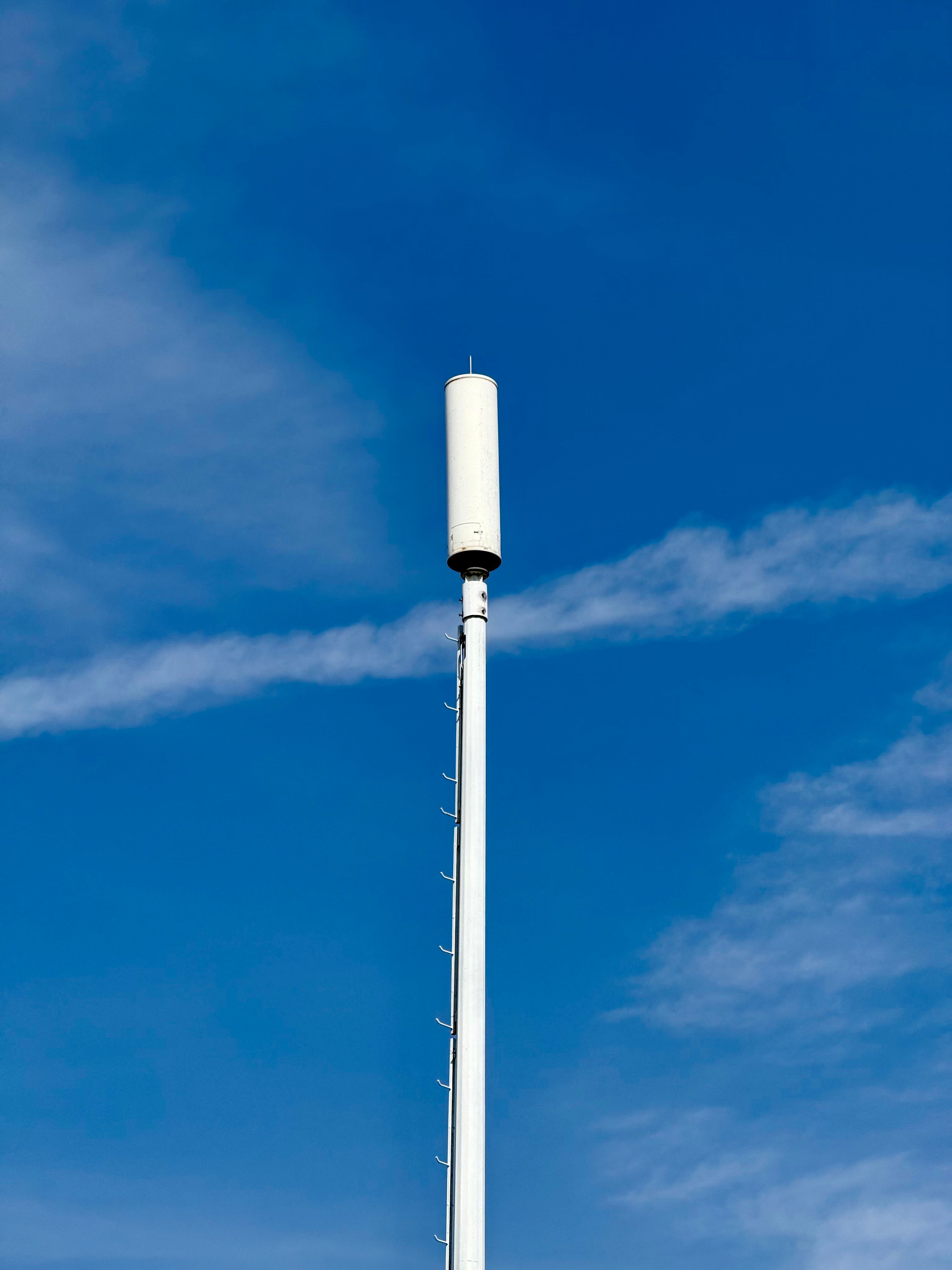
Photo by Anderson Wei on Pexels
The fundamental difference: who owns the masts
iD Mobile is an MVNO — a mobile virtual network operator. It owns no towers, no spectrum, and no physical infrastructure of any kind. It buys wholesale access to someone else's network and sells it under its own brand. That someone else is Three.
O2 is the opposite: a full mobile network operator with its own masts, its own spectrum holdings, and its own engineering programme. It's part of Virgin Media O2, and it answers to no one else for the quality of the signal it delivers.
This distinction drives almost everything else in this comparison. iD Mobile's coverage is Three's coverage. iD Mobile's speeds are Three's speeds, subject to whatever traffic-management terms sit in its wholesale agreement. What iD Mobile genuinely controls is price, plan structure, roaming policy, and customer service — and those are the areas where it competes.
The Three connection, and why it matters more than it used to
iD Mobile runs on Three's network. That was a straightforward statement until May 2025, when Vodafone and Three completed their merger to form VodafoneThree, now the UK's largest mobile operator by customer numbers.
So iD Mobile now sits on infrastructure that is in the middle of being combined with Vodafone's. In practice, the former Vodafone and Three networks are still being technically integrated — this is a multi-year engineering programme, not a switch that was flipped on merger day. But the direction of travel matters: the combined operator has more spectrum and more sites than either network had alone, and the stated aim is to reduce not-spots and lift speeds across both footprints.
For an iD Mobile customer, this is mostly good news over time, but it does mean that any coverage claim you read about iD Mobile is a claim about a network that is actively changing underneath it. If you want the wider picture on how the four physical networks compare, our EE vs O2 vs Vodafone vs Three comparison goes into more depth on each one's footprint.
Coverage: the headline numbers are closer than the marketing suggests
iD Mobile advertises 99% UK population coverage for 4G, inherited from Three's network.
O2 also reaches roughly 99% population coverage for 4G. On that specific measure, they are effectively level, and anyone claiming a dramatic coverage gap between them at the 4G level is overstating it.
Where O2 pulls ahead is in what it has done beyond basic 4G. Two things stand out.
First, 5G standalone. As part of a £700m network investment under its Mobile Transformation Plan, O2 reports 87% population coverage for 5G standalone — that's true 5G running on a 5G core, rather than 5G radio bolted onto 4G infrastructure. Standalone 5G is what delivers the lower latency and better performance consistency that the technology actually promises.
Second, satellite. O2 has introduced O2 Satellite, a direct-to-device service that connects ordinary handsets to satellites where there is no terrestrial mast in range. O2 says this extends its coverage to 95% of UK landmass. That landmass figure is the one worth paying attention to, because population coverage and landmass coverage are very different measurements — 99% of people live in a small fraction of the country's actual area. If you spend time hiking, sailing, farming, or working in genuinely remote parts of the UK, landmass coverage is the number that describes your experience, and iD Mobile has no equivalent offering.
O2 also won Best Mobile Network Coverage at the Uswitch Telecoms Awards 2026, which is a reasonable external corroboration of the coverage story rather than a self-reported claim.
If coverage is your deciding factor, our guide to the best network coverage in the UK covers how to check your specific address rather than relying on national averages.
Speed: where the story inverts
Here is the genuinely interesting wrinkle, and the reason "O2 has the best coverage" shouldn't be read as "O2 is the fastest".
Opensignal's January 2026 testing put O2's average 5G download speed at around 89.9Mbps — a perfectly usable figure, but slower than Three, Vodafone, and EE in that same round of testing. O2 is winning on where you can get a signal, not on how fast that signal is once you have it.
Since iD Mobile runs on Three's network, iD Mobile customers are riding infrastructure that tested faster than O2's in that measurement. That is a real advantage, with one important caveat: MVNOs don't always receive identical network priority to the host network's own customers, and wholesale agreements can include traffic-management terms. So "iD Mobile gets Three's speeds" is directionally right but not a guarantee of parity in congested conditions.
The honest summary: O2 is more likely to give you a bar of signal somewhere unusual; Three-based iD Mobile is more likely to give you a faster connection where both have coverage. Which one matters more depends entirely on where you spend your time.
Price
iD Mobile is built around being cheap. Plans start from around £6/month, which puts it firmly in budget MVNO territory alongside the other value-focused operators we've compared, such as Lebara and 1pMobile and Asda Mobile and Honest Mobile.
O2, as a full network operator, starts higher. That's the standard MVNO-versus-network dynamic: you're paying for the infrastructure investment, the wider product range, the retail estate, and the direct customer relationship. O2 also sells handset contracts, family plans, and business tariffs — categories iD Mobile either doesn't serve or serves more narrowly.
If your priority is simply the lowest monthly cost for a decent data allowance, iD Mobile will usually win, and our budget SIM-only roundup shows where it sits against the rest of the cheap end of the market. For a broader view including the networks, see the best SIM-only deals guide.
The Currys connection
iD Mobile is owned by Currys, the retailer that absorbed Carphone Warehouse. This is more relevant than it sounds. It means iD Mobile has a physical high-street presence through Currys stores — you can walk in and talk to someone, which is unusual for a budget MVNO, most of which are online-only operations.
If you've ever been frustrated by an MVNO that only offers chat support, this is a genuine practical difference. It doesn't affect signal quality, but it affects what happens when something goes wrong with your account.
Roaming
iD Mobile includes roaming in 50 destinations at no extra cost. For a provider at this price point, that's a strong inclusion — plenty of budget MVNOs either charge for roaming or restrict it to the EU only.
O2's roaming arrangements differ by plan tier and have changed over the years, so the practical answer depends on which specific O2 plan you're on rather than on O2 as a brand. That's true of most of the major networks now; our guide to SIM-only deals with EU roaming covers how to read the small print, and if you're travelling on Three's network specifically, our piece on using Three abroad covers the plan-tier complications there.
For longer or more far-flung trips, a dedicated travel SIM or eSIM often beats either provider's roaming add-on outright — you can compare travel SIM and eSIM options here.
5G access
Both offer 5G. The difference is in the underlying technology and how far it reaches.
O2's 87% standalone 5G coverage is a meaningful technical lead in infrastructure terms. iD Mobile provides 5G access on Three's network, which has historically performed well on 5G speed in independent testing even where its standalone deployment differs.
If 5G specifically is your priority rather than general connectivity, our 5G SIM-only deals guide breaks down which providers include it as standard and which treat it as an upsell.
Plan types and flexibility
This is where the network-versus-MVNO gap widens.
iD Mobile focuses on SIM-only plans, with the simplicity and low prices that focus allows. It does offer handset deals through the Currys relationship, but the core proposition is a cheap SIM.
O2's range is far broader: handset contracts across the full device catalogue, family and multi-line plans, business tariffs, and a range of contract lengths. If you need family SIM plans, multi-SIM arrangements, or business SIM-only deals, a full network operator is generally better equipped than a budget MVNO.
Students weighing up value against contract flexibility may also want our student SIM-only guide, and anyone specifically wanting a fixed term should look at 12-month SIM-only deals.
Heavy data users should check the unlimited data SIM-only comparison, since unlimited tiers are priced very differently between MVNOs and networks.
A related comparison worth reading
If you're weighing an MVNO against O2 generally rather than iD Mobile specifically, our VOXI vs O2 comparison covers a similar matchup — VOXI sits on the Vodafone side of VodafoneThree rather than the Three side, so the coverage picture differs slightly, but the underlying MVNO-versus-network trade-off is much the same.
Which one should you choose?
Choose iD Mobile if: price is your main concern, you want roaming in 50 destinations included without paying extra, you're in a well-covered area where Three's network performs strongly, or you value being able to sort out account problems in a Currys store rather than through an app.
Choose O2 if: you spend time in genuinely remote parts of the UK where the satellite service and 95% landmass coverage would actually change your experience, you want standalone 5G at the widest available reach, you need family, business, or handset-contract options an MVNO doesn't offer, or you'd simply rather deal with the network operator directly.
The trap to avoid
Don't choose on national coverage percentages. Both are around 99% population coverage for 4G, and that number is very nearly meaningless as a way of separating them — it describes almost everyone in the country regardless of provider.
What actually varies is your specific address, your commute, and the places you regularly visit. Check both providers' coverage checkers for your postcode and the postcodes you spend real time at. A five-minute check beats any amount of national-average comparison, including this article.
Switching between them
Moving from one to the other is a PAC-code process and keeps your number. Our guide to switching SIM provider covers the steps and the timing.
If you're changing SIM and thinking about a new handset at the same time, it's worth comparing refurbished phones before paying full retail — and if you're replacing a phone you already own, get a live trade-in price for it first, since the trade-in value often covers a meaningful chunk of the replacement. If you're pairing a new SIM with a refurbished iPhone specifically, our guide to the best SIM for a refurbished iPhone covers the compatibility points worth checking.
The bottom line
iD Mobile is a budget MVNO on Three's network — now part of VodafoneThree — offering 99% population coverage, roaming in 50 destinations, prices from around £6/month, and the unusual advantage of high-street support through Currys. O2 is a full network operator that has invested £700m in its infrastructure, reaches 87% of the population with standalone 5G, extends to 95% of UK landmass via satellite, and won Best Mobile Network Coverage at the Uswitch Telecoms Awards 2026 — while testing slower than Three, Vodafone and EE on average 5G download speed in Opensignal's January 2026 data.
That last point is the one most comparisons skip. Best coverage and best speed are different awards, and O2 is currently winning one of them. If you need signal in unusual places, O2's infrastructure lead is real and worth paying for. If you need a fast, cheap connection in ordinary places, iD Mobile is riding a faster network for less money.
Compare live SIM-only deals across the UK market →
Frequently asked questions
Ready for a better SIM deal?
Compare SIM only deals now →