Two Ultras, one generation apart
The Galaxy S22 Ultra and S23 Ultra look almost identical side by side. Same squared-off silhouette, same S Pen slot in the body, same 6.8-inch display, same 5,000mAh battery on paper. Samsung barely touched the exterior design between generations.
That makes this a more interesting comparison than most, because the differences are almost entirely internal, and two of them genuinely matter.
If you are choosing between them refurbished, or deciding whether to sell one and move to the other, the honest answer is that the gap is bigger than the identical exteriors suggest but smaller than a full year of marketing would have you believe.
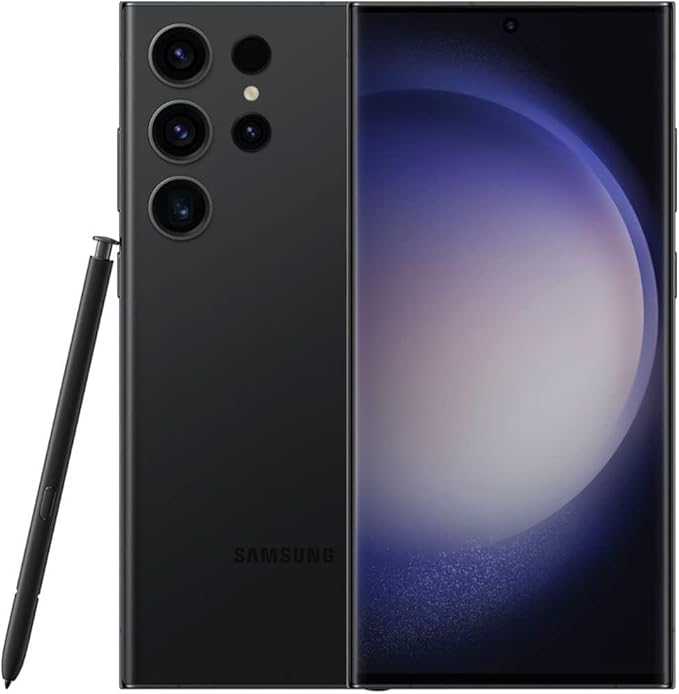
The camera: 108MP to 200MP
This is the headline change. The S22 Ultra used a 108MP main sensor; the S23 Ultra moved to a 200MP one.
Megapixel counts alone are a poor guide to image quality, and a 200MP sensor does not produce photos that are twice as good. What the extra resolution allows is far more aggressive pixel binning, which is the process of combining groups of adjacent pixels into one larger effective pixel. More light gathered per output pixel means cleaner images in difficult conditions.
In practice, the gap shows up most clearly in two situations.
Low light. Indoor shots, evening photography, anything without good natural light. The S23 Ultra holds detail that the S22 Ultra loses to noise reduction, and the difference is visible without pixel-peeping.
Cropping. If you regularly crop into photos afterwards, the extra resolution gives you room to work that the older sensor simply does not have.
In good daylight, most people would struggle to tell a photo from either phone apart. If your photography is mostly outdoors and well-lit, this upgrade matters considerably less than the numbers imply.
The rest of the camera system is broadly unchanged between generations. Both have the same 10x periscope telephoto and a similar ultrawide. Samsung concentrated its effort on the main sensor and left the supporting cast alone.
The chip: efficiency more than raw speed
The S23 Ultra runs the Snapdragon 8 Gen 2, and importantly, Samsung shipped it globally rather than splitting between Snapdragon and Exynos by region as it had previously. The S22 Ultra shipped with either the Snapdragon 8 Gen 1 or the Exynos 2200 depending on where you bought it.
The raw performance jump between the two is real but not transformative for everyday use. Both phones handle anything you are likely to ask of them, and neither feels slow.
The meaningful difference is efficiency. The 8 Gen 1 in particular developed a reputation for running hot and draining quickly under sustained load, and the Exynos 2200 fared no better. That is why S23 Ultra battery life is noticeably better in real use despite an identical 5,000mAh cell.
If you owned an S22 Ultra and found it getting warm during gaming, video recording or long camera sessions, that is the chipset, and it is the single thing the S23 Ultra most obviously fixes.
There is a knock-on effect worth understanding: because the S22 Ultra came in two chipset variants depending on region, the refurbished market treats it less consistently than the S23 Ultra. Buyers who know the difference will pay more for a Snapdragon unit.
What about everything else?
Genuinely marginal, which is unusual for a generational gap.
The S23 Ultra has slightly flatter display edges, which some people prefer for reduced accidental touches and better screen protector fit. Bezels are fractionally slimmer. The front camera is modestly improved.
The S Pen, display technology, charging speeds, build materials, water resistance rating and overall dimensions are effectively the same. If you put both in cases, you would struggle to identify which was which.
This is a generation where Samsung improved the internals and deliberately left the exterior alone, which is precisely why the used market values them differently than you might expect.
Which is worth more when you sell?
The S23 Ultra commands a clear premium, and the gap is usually wider than a single generation would normally justify. Three things drive that.
Software support window. Samsung update commitments run from each phone's launch, so the S23 Ultra simply has more remaining. For a buyer choosing between them on the second-hand market, this is frequently the deciding factor, and it directly translates into what recyclers will pay.
Chipset reputation. The heat and battery-drain issues associated with the Snapdragon 8 Gen 1 and Exynos 2200 followed the S22 Ultra into the resale market. Rightly or not, that suppresses demand.
Storage tiers. The S22 Ultra started at 128GB and ran to 1TB; the S23 Ultra dropped the 128GB tier entirely and started at 256GB. Base-model S22 Ultras are the weakest performers of either generation on resale, and they drag the average down.
That last point matters practically. If you are researching what an S22 Ultra is worth and looking at averages, you may be seeing a number skewed by 128GB units. Check the price for your actual storage tier.
Both phones are worth comparing across recyclers before you sell. The spread between the best and worst offer on a device at this price point is routinely enough to change the decision, and the highest offer is rarely from the most obvious place. Compare live Galaxy S23 Ultra prices and live Galaxy S22 Ultra prices side by side before committing to any single offer.
Which should you buy refurbished?
Buy the S23 Ultra if you want the better camera in low light, care about battery endurance under load, or plan to keep the phone for three or more years. The longer remaining support window is the thing that justifies the higher price, more than the camera does.
Buy the S22 Ultra if you want maximum flagship hardware for the least money and are comfortable with a shorter update window. It remains an excellent phone, and the price gap on the refurbished market is often substantial enough to make it the smarter buy on pure value.
If you go for the S22 Ultra, two things are worth doing: check whether it is the Snapdragon or Exynos variant if you can, and avoid the 128GB base model unless the discount is significant, because storage is not expandable and 128GB is tight for a phone with a 200MP-adjacent camera producing large files.
Browse current stock and grades for both on our refurbished Samsung Galaxy comparison.
What about jumping to something newer?
If you are considering either of these, it is worth at least knowing what the newer Ultras cost refurbished before committing. The S24 and S25 Ultra both bring further efficiency gains and longer support windows, and depending on timing, the price gap can be smaller than expected.
The general pattern with Samsung flagships is that the steepest depreciation happens in the first eighteen months, which is exactly why buying a two-generation-old Ultra refurbished tends to be such good value, and why selling one at the right moment matters.
The short version
The S23 Ultra is the better phone, and the camera and battery improvements are real rather than marketing. But the S22 Ultra is the better value, by a wide enough margin that it remains the sensible choice for most buyers who are not specifically chasing low-light photography.
If you are upgrading from an S22 Ultra to something newer, check what yours is worth before trading it in at a network. Recycler offers are frequently higher than network trade-in schemes, and the difference is often material.
Related reading: Galaxy S22 vs S22 Ultra: which is worth more when you sell · Best refurbished Samsung to buy · How much is my Samsung worth? · When is the best time to sell your Samsung Galaxy?
Frequently asked questions
Ready to get the best price?
Compare prices now →